
Kysora Difference
What Makes Kysora Different
Kysora Solutions represents a new generation of boutique advisory firms built for a rapidly evolving and digitally connected world. While traditional consulting models often operate in functional silos, we believe modern organisations require integrated thinking that connects strategy, operations, technology, and financial outcomes. Our approach combines deep experience with fresh perspectives—challenging conventional “old world” consulting approaches that focus primarily on analysis and static recommendations.
Instead, we adopt a new-world mindset that prioritises agility, collaboration, and execution. As a boutique firm, we work closely with our clients to co-create practical solutions that deliver measurable impact. While our expertise spans key functional areas of the business, we take a holistic view of transformation—ensuring that every solution considers its broader organisational impact and contributes to sustainable growth.
This combination of experience, fresh thinking, and hands-on execution allows Kysora to deliver strategic insight while remaining agile, responsive, and deeply invested in our clients’ success.
The Kysora Approach
At Kysora Solutions, we believe that consulting should be defined not by presentations, but by the value created for our clients.
Our approach combines deep advisory expertise with practical implementation capability, helping organisations move from strategy to execution with confidence.
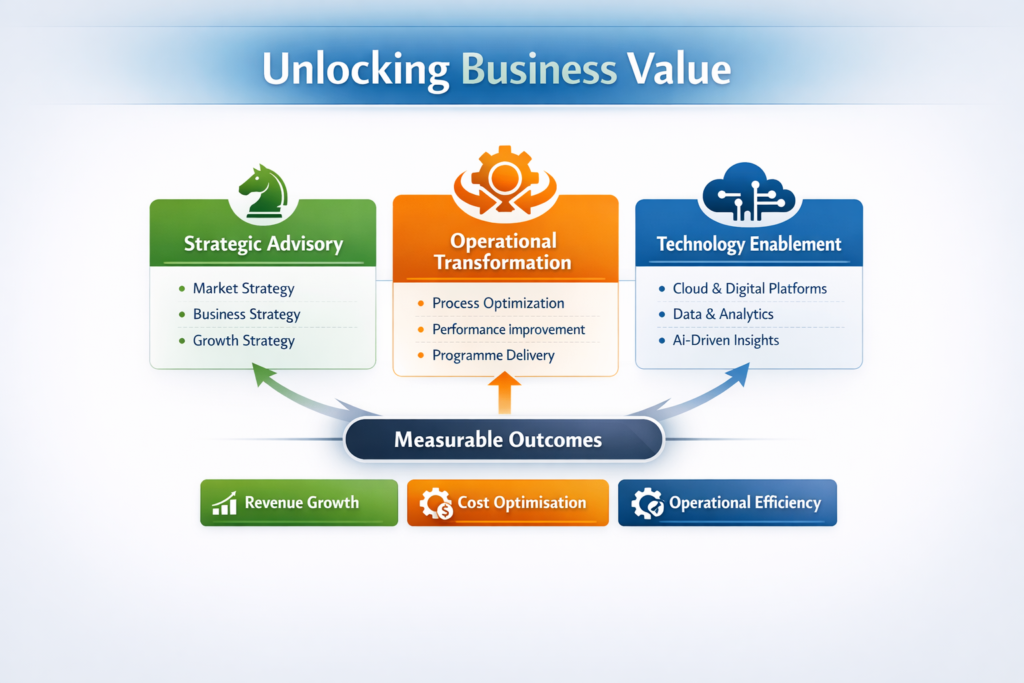
We work alongside our clients to unlock value through:
Strategic Advisory – Defining clear direction and growth opportunities
Operational Transformation – Optimising processes, performance, and efficiency
Programme Delivery – Turning strategy into successful implementation
Technology Enablement – Leveraging digital platforms, data, and analytics
Governance, Risk and Compliance – Strengthening resilience and organisational control
As a boutique advisory firm, we bring senior expertise, agility, and a partnership mindset to every engagement.
Our focus is simple: delivering practical solutions that create measurable business impact.
Why Traditional Consulting Models No Longer Work — And What Modern Businesses Need Instead
For decades, traditional consulting firms have played an important role in helping organisations define strategy, optimise operations, and implement large transformation programmes. However, the business environment has evolved dramatically.
Markets now move faster, technology cycles are shorter, and organisations demand tangible, measurable outcomes rather than theoretical recommendations.
As a result, many clients have become increasingly dissatisfied with legacy consulting approaches that were designed for a slower, more predictable business environment.
A new model of consulting is emerging — one that combines deep expertise, practical execution capability, and measurable impact.
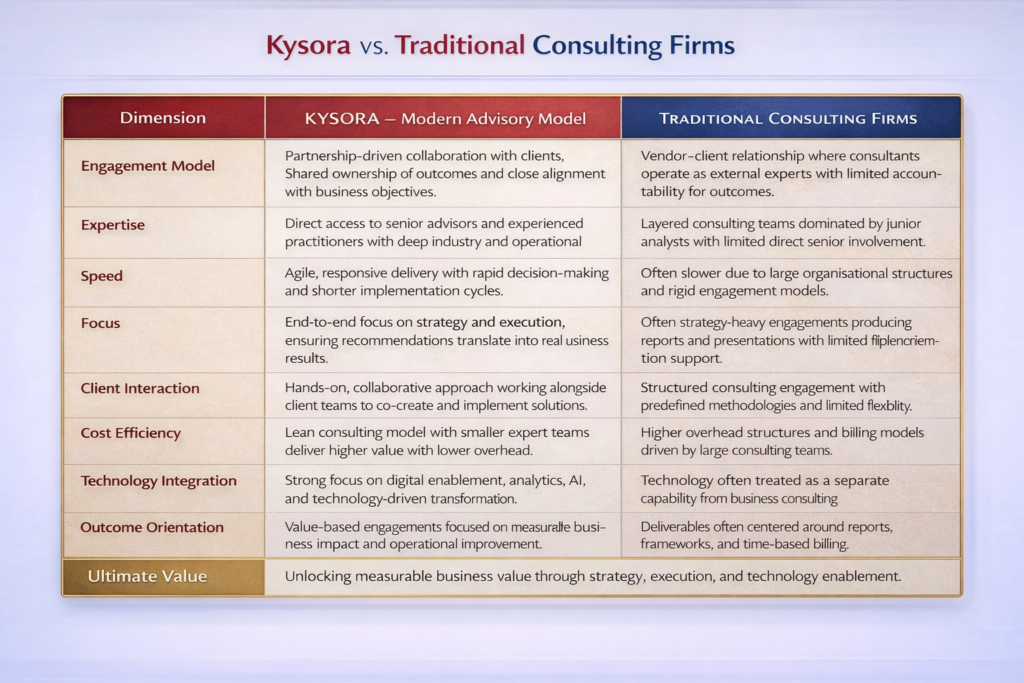
Below are some of the common challenges with traditional consulting models, and how modern consulting approaches are evolving to address them.
1. PowerPoint Deliverables Instead of Real Outcomes
Many consulting engagements still focus heavily on analysis, research, and presentations. Clients often receive detailed strategy documents, transformation roadmaps, and extensive slide decks — but limited support in actually implementing the solutions.
While insights are valuable, organisations today expect partners who go beyond recommendations and help drive execution and deliver measurable business results.
Modern expectation:
Consultants who remain engaged through implementation and take ownership of delivering outcomes.
2. Overly Theoretical Approaches
Traditional consulting models frequently rely on frameworks, theoretical models, and benchmarking studies. While these tools can provide useful structure, they often fail to address the practical realities organisations face on the ground.
Modern businesses require advisors who combine strategic thinking with real-world operational experience.
Modern expectation:
Consultants who understand both strategy and operations, and who can translate ideas into practical actions.
3. Large Teams of Junior Analysts
A common criticism of traditional consulting engagements is the heavy reliance on large teams of junior staff. While clients may engage a firm for its senior expertise, much of the day-to-day work is often performed by less experienced analysts.
This model increases cost and can dilute the value clients expect.
Modern expectation:
Lean teams led by experienced practitioners who are directly involved in solving the client’s most critical challenges.
4. Time-Based Billing Instead of Value-Based Engagements
Historically, consulting has been priced based on time and resources — day rates, hourly billing, and long engagement cycles.
Today, organisations increasingly prefer engagements aligned to value creation and measurable outcomes, rather than simply the amount of time spent on a project.
Modern expectation:
Consulting partners who align their incentives with the value delivered.
5. Strategy Without Implementation
Many consulting engagements stop once recommendations have been delivered. However, the real challenge for most organisations lies in execution — turning strategy into operational reality.
Without strong implementation support, many well-designed strategies fail to produce meaningful results.
Modern expectation:
Advisors who bridge the gap between strategy and execution and support the organisation through implementation.
6. Generic “One-Size-Fits-All” Solutions
Traditional consulting firms often rely on repeatable frameworks and standard methodologies developed across multiple clients. While these can offer useful starting points, they frequently overlook the unique context of each organisation.
Every organisation has its own culture, systems, and operational complexities.
Modern expectation:
Tailored solutions designed around the specific realities of the client organisation.
7. Long Engagement Cycles
Traditional consulting engagements can extend over many months or even years, often with lengthy analysis phases before meaningful change begins.
In today’s fast-moving markets, organisations require faster cycles of insight, experimentation, and implementation.
Modern expectation:
Agile approaches that deliver results quickly while allowing continuous adaptation.
8. Working To the Client Instead of With the Client
Some consulting models position the consultant as an external expert who diagnoses problems and prescribes solutions from the outside. This approach can create resistance within organisations and reduce ownership of the outcomes.
Sustainable transformation requires collaboration and shared ownership.
Modern expectation:
Consultants who work alongside client teams, building capability and co-creating solutions.
9. Limited Integration of Technology and Data
In the past, consulting engagements often focused primarily on strategy, organisational design, and process improvement. However, modern businesses are increasingly driven by digital platforms, data analytics, automation, and artificial intelligence.
Consulting firms that lack deep technology capability struggle to deliver solutions that address the full complexity of modern organisations.
Modern expectation:
Advisors who combine business expertise with strong digital and technology capabilities.
10. Lack of Accountability for Results
In traditional consulting models, engagements often conclude once recommendations are delivered. The responsibility for implementation and results rests entirely with the client.
Today, organisations increasingly expect consulting partners who are willing to share accountability for outcomes.
Modern expectation:
Consulting partnerships that are aligned with measurable business impact.